 The various cuisines from the state of gujrat can be seen in above pic. It is as colourful and beautiful as the people living there.
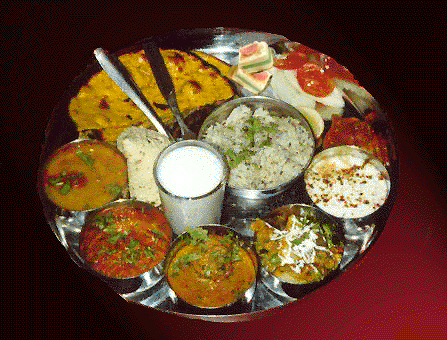
The traditional Gujarati food is primarily vegetarian and has a high nutritional value. The typical Gujarati thali consists of varied kinds of lip smacking dishes. Gujarati cuisine has so much to offer and each dish has an absolutely different cooking style. Some of the dishes are stir fry, while others are boiled. Gujarati food is more often served on a silver platter. Gujaratis use a combination of different spices and flavors to cook their meals and this is what makes their food truly exotic.
The traditional Gujarati thali mostly encompasses rotli, dal or kadhi, sabzi also known as shaak and rice. People in Gujarat eat one or the other type of curry along with rice and roti in almost every meal Gujarati dishes usually have a very subtle taste that makes it truly distinct from other Indian cuisines. Lot of emphasis is laid on maintaining hygiene while cooking. Most of the Gujarati dishes are sweet, while others have a quite larger concentration of sugar as compared to salt and spices. Sometimes, jaggery is used as an alternative to sugar.
Gujarati food is highly energy efficient and thus do not cause much of fuel wastage. The staple food of Gujarat consists of homemade pickles, chhaas (buttermilk), salad etc. main course includes vegetables which are usually steamed and dal. Vaghaar is a blend of spices, which is purified in hot oil and then added to the dal. To prevent the body from becoming dehydrated, lot of salt, sugar, tomato and lemon is used.
Gujarati cuisine differs from season to season depending on the availability of vegetables. People in the urban areas are starting some new eating trends.
In the summer season, spices such as black pepper and its constituent spices are used in lesser quantities. People fast on a regular basis and limit their diet to milk, nuts and dried fruits. In the modern era, more and more youngsters have started developing taste for oily spicy food.
Even, the modern chefs are coming up with fusion food concept by combining Gujrati food and Western food. Desserts, which were in the ancient times offered only on festivity or some special occasions, have now found their way in the daily meals.
A Gujarati 'thali ' offers endless variety of savories, vegetables, lentils, fried snacks, sweet meats etc., accompanied with butter milk, yoghurts and nuts. So varied and palate pleasing is the choice that one turns vegetarian.
Gujarati thali consisting of rice, dal, curry, vegetables, sprouted beans, farsan, pickles, chutney and raita. Food is usually non spicy and oil is used sparingly. Farsans are of various varieties .
such as Pathara, Khaman Dhokla, and Khandvi. Srikhand, a yoghurt dessert flavoured with saffron, nuts and fruits.
Vibrant Gujarat has a lot to offer to a lover of vegetarian cuisine. Culinary art of Gujarat is well defined and reflect the nature of the people here. Food here is simple, graceful and yet very down to earth. Most remarkable feature of Gujarati cuisine and that which makes it outstanding amongst the rest of north Indian vegetarian food is its inherent subtlety and texture.
Food is not over-cooked in Gujarati cooking which helps to retain the flavour and texture of the component vegetables in a 'shaak' (sabzi) and also in 'kathol' (pulses). A good Gujarati Maharaj (cook) also makes subtle use of spices to keep the integral taste of the vegetables which otherwise gets lost in the mix of spices.
However, the greatest contribution of Gujarati cuisine to the rest of the country are a huge variety of scrumptious snacks. Known as 'Farsan' in Gujarat (the word that denotes savoury and lives up to its meaning), constitutes an essential part of the Gujarati meal. These snacks are not very oily and very rich in taste. These are often complimented by spicy chutneys and hot pickles.
Staple food of the people is wheat here and rotalis (roti) prepared from it is an integral part of the meals. Consumption of bajra and jowar is rampant in winter season. Rice is also a staple diet of the people in some regions. Vegetarianism is mainly practiced in Gujarat largely due to the influence of Jainism.


0 comments:
Post a Comment