Showing posts with label 1. An Introduction to Indian Food. Show all posts

Wednesday, 10 February 2010

An Introduction About Indian Spices

Spices are defined as "a strongly flavored or aromatic substance of vegetable origin, obtained from tropical plants, commonly used as a condiment". In ancient times, spices were as precious as gold; and as significant as medicines , preservatives and perfumes. India - the land of spices, plays a significant role in the global spices market.

No country in the world produces as many kinds of spices as India with quality spices come from Kerala, an Indian state. At present, India produces around 2.5 million tones of different spices valued at approximately 3 billion US $, and holds the premier position in the world. Because of the varying climates - from tropical to sub-tropical to temperate-almost all spices are grown in this country. In almost all of the 25 states and seven union territories of India, at least one spice is grown in abundance.
Spices and herbs are good not only for our taste buds but also for our health. They supply calcium, iron, vitamin B, vitamin C , carotene and other antioxidants. For instance fresh parsley has been linked with cancer prevention due to its antioxidant content and spicy food is much more appealing than a vitamin pill. Besides herbs and spices don't have any kilojoules or fact, so you can eat them to your heart's content.


History Of Indian Spices:

The fame of Indian spices is older than the recorded history. The story of Indian Spices is more than 7000 years old. Centuries before Greece and Rome had been discovered, sailing ships were carrying Indian spices, perfumes and textiles to Mesopotamia, Arabia and Egypt. It was the lure of these that brought many seafarers to the shores of India.

In the ancient era, the Greek merchants thronged the markets of South India, buying several expensive items including the spices. Epicurean Rome was spending a fortune on Indian spices, silks, brocades, Dhaka Muslin and cloth of gold, etc. It is believed that the Parthian wars were being fought by Rome largely to keep open the trade route to India. It is also said that Indian spices and her famed products were the main lure for crusades and expeditions to the East.

With the arrival of the Muslims the scenario altered further. An assortment of spices was used in Muslim preparations and the usage of such spices was popularised throughout the nation under the Muslim rule. As a result such spices gradually became a part of the Indian cuisines. Indian spice trading underwent changes once again during the colonial rule. As far as trading is concerned the Arabian traders were quite instrumental in popularising the Indian spices in the different corners of the world. In India, Arabian traders got the rare and exotic spices of the Far East from local spice merchants. India had spent the previous two millennia spreading its culture to the Spice Islands of the east. Arabian traders were able to make good money supplying these spices, even with the high prices paid to the Indian middle men, not only to their countrymen back home, but to Europe as well.

It was in the year 1492 A.D., that Christopher Columbus discovered the New World. Five years later, four tiny ships sailed southward from the port of Lisbon, Portugal, under the guidance of Captain Vasco Da Gama. Like Columbus, Vasco Da Gama too was searching for a new route to the spice lands of Asia. While Columbus failed to achieve the goal, Da Gama succeeded. In a two year, 24,000 miles round trip, he took his ships around the continent of Africa to India and back to Lisbon. Only two of the four ships survived to reach their homeport. These two ships brought back a cargo of spices and other products worth 60 times the cost of the said voyage. Even under the Dutch rule spice trading in India was encouraged. However a combination of spices spread throughout the world as curry powder with the coming of the British.

The British reign in modern India encouraged the spice trading in India. Sandalwood, turmeric, saffron, coriander and a host of other Indian spices were exported from India to other parts of the world. Post independence the trade of Indian spices kept flourishing and a Board of Spices was established to look after the industry. The history of Indian spices depicts that these ingredients were also used in alternative medicines. For instance Ayurveda makes use of several herbs that are also used for culinary purposes. Aloe Vera, cloves, cinnamon, turmeric, black pepper, etc had been extensively used in Ayurvedic medicines.

In contemporary India spices are used both as culinary and medical ingredients.


Types Of Spices:
  1. Bark Type Spices
  2. Leaf Type Spices
  3. Root Type Spices
  4. Flower Type Spices
  5. Miscellaneous Type of Spices
  6. Seed Type Spices
  7. Fruit Type Spices
  8. Pepper Type Spices

There is a popular belief that spicy foods are bad for health. This belief is not only far from the truth but also that; spices in fact have medicinal properties and are good for health. Spices are well known as appetizers and digestives and are considered essential in the culinary art all over the world.. Some of them have anti-oxidant properties, while others have preservative properties and are used in some foods like pickles and chutneys, etc. Some spices also possess strong anti-microbial and antibiotic activities. Many of them possess medicinaTypes of Spicesl properties and have a profound effect on human health, since they affect many functional; processes. For example, spices intensify salivary flow and the secretion of amylase, neuraminic acid and hexosamines. They cleanse the oral cavity from food adhesion and bacteria; they may help to check infection, and to protect the mucous membrane against thermic, mechanical and chemical irritation. Spices increase the secretion of saliva rich in ptyalin, which facilitates starch digestion in the stomach, rendering the meals, which are rich in carbohydrates, more digestible.

Spices possibly activate the adrenal-cortical function and fortify resistance and physical capacity. Stroke volume, blood pressure and stroke frequency can be markedly diminished or augmented by means of spices. Spices inhibit thrombus formation and accelerate thrombolysis.

During World War I, and a few years after, India was principal supplier of essential oils like thymol, produced both with the help of traditional distillation methods as well as modern steam distillation methods. But the market was lost forever due to invention of synthetic essential oils.


South Indian Spices:
The south Indian foods are popular for their non-steaming spices such as cinnamon, cardamom, ginger, cover garlic, cumin, coriander and turmeric.

The history of the South Indian spices can be traced back to 7,000 years. It is a chequered history of lands, discovered or destroyed, kingdoms built or brought down wars won or lost, treaties signed or flouted, favours sought or offered. Even today, South Indian spices hold the same spell. In Tamil Nadu, Karnataka and Andhra Pradesh, the cultivation of paprika and a chilli variety with high colour value and low pungency is increased. Within the past one decade, the international trade in spices has grown by leaps and bounds.

Some of the South Indian spices include Kura Podi (Curry powder), Sambar Podi (Sambar powder), Charu Podi (Rasam powder), Pacchadi Podi (hot chutney powder) and Pulusu Podi (Sweet `soup` powder).

Pulusu Podi is used to make something like sambar. Rasam powder or Charu Podi is a thin broth that can be drunk as soup or eaten with rice. It is rather spicy and makes a nice hot drink with a warm sensation from the spices. Pacchadi Podi or hot chutney powder is used to make all kinds of chutneys with tomatoes, egg plant, raw tamarind, cucumber, etc.


Information Sources: Indianetzone

sign

Tuesday, 29 December 2009

An Introduction To Kerala Cuisines And Recipes

Kerala is located between north latitudes 8 degree 18' and 12 degree 48' and east longitudes 74 degree 52' and 72 degree 22', this land of eternal beauty encompasses 1.18 per cent of the India. The land area of kerala is about 38,863 sqkm, with a total population of 31,838,619. It is about 3 per cent of the country's population. The population density of the state is about 655 people per square kilometer, About 16 per cent of the people live in the cities. Most of the others live in large, semi-urban villages.

If there is one place in the riveting diversity of India where there is tangible beauty and a phenomenal thing like total literacy, it is in Kerala. Kerala is full of good things. This small State in the southern tip of the Indian peninsula is an easy winner owning to its great mind-blowing landscape and infinity of intriguing customs, high-intensity cultural life and educated public so often dressed in white. From Kasargode to Thiruvananthapuram Kerala is choc-a-bloc with places that attract tourists and travelers from all over the world.


South India has hot, humid climate and all its states are coastal. Rainfall is abundant and so is the supply of fresh fruit, vegetables and rice. Andhra Pradesh produces fiery Andhra cuisine which is largely vegetarian yet has a huge range of seafood in the its coastal areas. Tamilnadu has Chettinad cuisine, perhaps the most fiery of all Indian food. This style too is largely vegetarian.
From Kerala comes Malabari cooking, with its repertoire of tasty seafood dishes. Hyderabad is home of the Nizams (rulers of Hyderabad) and regal Nizami food rich and flavorful with tastes ranging from spicy to sour to sweet. Hyderabadi food is full of nuts, dried fruits and exotic, expensive spices like Saffron.


Kerala Food:

Food in Kerala

Food in Kerala (Malayali food please, not Keralan) depends both on area - South versus North Kerala, backwaters versus the hills - and community: Moplah (Muslim), Syriani (Christian) and different Hindu communities.


Many things are common like the use of coconuts, fish and rice, but other things can be quite different - obviously something like beef which is a big feature of Syriani food would not be eaten by Hindus - but I also find less known differences. For example, the Thiyya community from North Kerala , is totally obsessive about shellfish like kalamakai (mussels). No one from South Kerala ever seems to eat them which is perhaps for geographical reasons - rocky coasts versus sandy beaches.


One of the interesting points of difference between communities is their differing use of breads all based generally on rice flour: appams and iddiappams for Syrianis, pathiri for Moplahs, nai-patthal for Thiyyas, appams and puttu for Nairs, dosas and puttu for Namboodiris. These are well worth trying since most of them would be hard to get outside Kerala. Another Kerala staple is tapioca which can be very good cooked there (and only there).


In Cochin and the backwaters the cult fish to try is karimeen or pearl spot, a quite beautiful really estuarine fish. Otherwise you'll get the usual seer, a big meaty fish which tends to dominate fish cooking in South India. Even in Bombay, where pomfret rules, followed by rawas and surmai, you'll get more variety than you get in restaurants in South India. But I mustn't get into a rant on this.


Moplah cooking is among the best in Kerala, and relatively easy to get since many Moplahs have started restaurants. Their biriani is famous, if you like biriani (I don't). They have interesting Arab influenced dishes like harisa, which is their version of the stewed wheat and meat concept that becomes haleem in Hyderabad and khichada in North India. They have lots of lesser known things like mutta-malas, egg yolks cooked in sugar syrup and pulled into strings.


Syriani spiced beef (erachi olathiyathu) is wonderful. The authentic version will be dry fried and spicy, but not explosive and usually cooked with hard chips of coconut. Totally addictive stuff. Meen vevichadu is their fried fish, which varies a lot.


Hindus usually eat fish as well, and its always pretty good, whatever the version. Two vegetarian dishes that I totally gorge on are kalan, made from green bananas cooked with yoghurt and coconut oil and olan, made from pumpkin and beans cooked in coconut oil (if you don't like coconut oil, and some people hate it with a passion, you're going to have a hard time in Kerala).


A Typical Kerala Cuisine is Simple As:


Rice Main Course of Food :

The essential ingredient of the daily diet is rice. Breakfast, lunch or dinner, it is some rice preparation or the other, served along with a variety of fish. Fish is consumed in a variety of ways – it is preserved after being dried and salted or cooked in a delicious coconut gravy. Prawns, shrimps and crustaceans constitute some of the other famous delicacies.


Morning Meals:

After the morning dose of coffee, a typical malayali household serves breakfast that may either consist of soft idlis, prepared out of a paste of fermented rice and black pulses, or dosa, an oval spread of the same ingredients. Well-seasoned appams or periappams, made by mixing this paste with tomatoes, onions and other handy vegetables, are some of the other morning culinary delights.


Midday Meals:

Midday meals consist of boiled rice that may be mixed with moru (curd or bitter milk) or rasam (thin clear pepper water or soup) and a range of vegetables. Pachadi is a delicious dish, cooked out of tiny pieces of mango, mixed with hot spices. Sambar, pulses prepared with vegetables is a standard daily fare. Thoran, a coconut-based dry fish dish that is mixed with minutely chopped vegetables, herbs and curry leaves, and similar to avial, which is cooked in a sauce, is another delectable dish.Pappaddakams, or crunchy round flakes made of rice flour,chutneys (a kind of sauce) and pickles, are scrumptious additions without which a meal is incomplete.


Wheat preparations are more popular in Muslim establishments. Well-prepared spirals called barottas and pathiris are made from refined flour, fried in oil and served with vegetables and curries.Chappathi, poori (a sort of baked or deep fried equivalent of bread)may be cooked optionally.


Diverse Use of Ingredients:

A melange of aromas resulting from the free use of pepper, cardamom, cloves, turmeric, ginger, chillies, and mustard, used in most curries, fill the kitchens of the well-to-do, but generally the poorer folks content themselves with kanji (rice with water) and take fish with tapioca. Most dishes in Kerala are cooked in coconut oil and are incomplete without a mandatory use of coconut in some form or the other.


Kerala Snacks:

Kerala is equally famous for traditionally homemade snacks a variety of banana chips, and rice flour cookies, are served with evening coffee.


sign

Thursday, 30 July 2009

Introduction To Foods and Recipes of Uttar Pradesh

The wealth of its monuments, mystical call of its mountains and lakes, and the religious fervour that it evokes, have rendered Uttar Pradesh, one of the most fascinating states of the Indian Union.Situated in the northern part of India, it has the distinction of being the most populous state of India. In terms of area, it is the fourth largest, among all the states. The cuisine of Uttar Pradesh is just as diverse as its geography. Ranging from simple every day fare to rich, elaborate banquets, the cuisine of Uttar Pradesh has absorbed and adapted a variety of cuisines to create an entire smorgasbord of wonderful dishes. A vast majority of the state enjoys simple and sober vegetarian meals. With dal, roti, subzi and rice constituting the essentials of daily food habits.


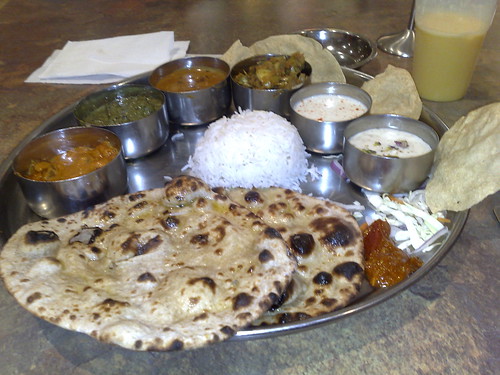
This Thali Contains:

The foods seen here in this thali are Saffrom Pulao rice, Lemon pickle, Tomato, carrot and cucumber salad, Red Onion Raita, Mint chutney, Mango chutney, Pickled shallots, Aloo ki sabzi, Palak paneer, Masala fish, Mughlai Fish Korma, Gajar Ka Halwa, Dal Kachori, Samosa, Onion Pakora, Pancha rathan Roti or chapati, Pepper Paapad, Masala lassi, Mango juice and water.


Uttar Pradesh (North State) was the biggest state in India. A diverse and multicultural foundation of the state offers a range of flavors and tastes in gourmet food. From Mughali dishes to authentic rustic flavor to kebabs and biryanis (rice preparation) cuisine of Uttar Pradesh is rich, invigorating and mouth-watering. Though today, this state is divided into 3 parts yet its flavours and foods are as rich as its history , be it the famous Lucknowi or the Mughlai. One can find classic foods in each and every corner of the streets in this state. And believe it or not, the street foods found here has no match to any high quality 5 star hotels.


The foods of Lucknow are known for it rich taste and perfect blend of spice and nuts. The Lucknowi style or the Mughlai style of foods are mix of such blends. Adding the nuts not only makes the foods tastier and rich but also increases its calories.

Indian food, especially food from Uttar Pradesh is similar to the cooking patterns of Middle East and Central Asia. Consisting of both non-vegetarian and vegetarian dishes, the most significant influence on this cuisine is Mughali, referencing the cooking techniques used by people back in the days of the Mughal Empire.

While most of the north Indian recipes have a common thread that unites them, Uttar Pradesh cuisine is no different. Similar to Punjabi and Kashmiri food, the state?s dishes use mutton, paneer (cottage cheese) and rich spices for flavor especially saffron (kesar) and cardamom. Some of the most popular and famous dishes from Uttar Pradesh include famous snacks such as samosa, pakora (fritters), kachoris and main dishes that include Nawabi foods such as mutton biryani, kebabs (Shami, Kakori, Pasanda etc) and a few fish preparations (Zamin Doz Macchli etc).

Complimenting these delightful main preparations are the breads. Made from wheat flour tandoori naan, kulcha, laccha paratha and tandoori roti rule the roost!

Uttar Pradesh cuisine offers a wide variety not just in food but also in desserts. Some of the most famous and traditional desserts include gulab jamun, kheer, kulfi, halwa and sheer kurma. Definitely a worthy treat for food lovers and those who like spicy and rich calorie food!

Praised from the centuries for the richness of their dishes as well as their hospitality, Nawabs of Lucknow never felt satiate by the compliments of their guests and remain experimenting to refine the quality of their cuisine. The popularity of the kitchen of Nawabs didn't remain restricted to their palaces but traveled like the aroma of these dishes to the entire sub-continent and became the sovereignty of the state. Ranging from the simple every day fare to rich, elaborate banquets, the cuisine of Uttar Pradesh has absorbed and adapted a variety of cuisine's to create an entire smorgasbord of wonderful dishes. The tourist from all over the world visit the state to savor its royal delicacies and it is stated that while on a visit to U.P and not tasting Awadhi Khanna (Awadhi Food), is like visiting Agra and not-seeing Taj Mahal.


Mughlai Cuisine:

When you visit the city don't forget to taste the alluring Mughlai cuisine. Mughlai delicacies are known for their richness as most of the prepared is with the usage of exotic spices, dried fruit, nuts, milk, and cream making it the royal rich and spicy meal. The mouth watering dishes that where the part of the Mughal cuisine are Biryani Badshahi, Shami Kabab. Murg Noor Jehani, Seekh Kabab, Chicken Korma, Tandoori chicken, Kesar Murgh etc. In the Mughal court the dinner was incomplete without Shami Kabab prepared from the minced meat mixed with spices. It is said that the Mughal cuisine irrespective of spicy is addictive, don't wait for it just try it, you can find the answer yourself.

The Mughal influence has left a huge impact on Indian food. The Muslims from western Asia brought the Mughlai cuisines to India in the 12th century when Mughal rulers conquered a large portion of India. During the Mughal dynasty, these dishes were prepared for the Mughal Emperors for elegant dining with dry fruits and nuts. The hospitality of sharing of food with others in Mughal courtly society helped India to absorb it as its own while making Indian cuisine to stand apart with pride.The Mughal influence on Indian food is immense. Mughlai cuisine is one of the most richest, popular and lavish cuisines in the country. These are pretty spicy and have unique fragrance. The cooking method includes lots of milk and cream with exotic spices, nuts and dried fruits to make it rich and spicy. Biryani, Korma, Palau and Pasendi are some of the famous Mughlai cuisine.

The Mughal influence on Indian food supported the evolution of Indian food to a great extent. The Mughlai cuisine full of rich gravies, pilafs and non-vegetarian foods such as kebabs, along with the fruits like apricots, peaches, plums and melons contoured the structure of the Indian food while offering it a distinct dimension. Each of the Muslim rulers offered something or the other to make Indian food the potpourri of spice, taste, tang and flavour. When Babur invaded India he brought his stylish food habits such as grilled meats along with different varieties of fruits and nuts from Central Asia. His son Humayun continued this tradition and also introduced a new tradition of rice-based pilaus and using of fruits and nuts in the meat stews in India. Marriages of Mughal rulers to several Rajput princesses added a new dimension to the Mughal cuisines.

The reigns of Jahangir and Shah Jahan, marked the evolvement of bountiful dishes in Indian cuisine. In the mean time, the Nizams of Hyderabad developed Biryani as their own style of cooking, which is now considered as one of the main dishes in India. The spices used in this preparation are easily accessible. These dishes are specially preferred in Delhi, Lucknow in the North and Hyderabad in the South. These have the strong influence of Muslim cooking style along with their Muslim names.

The saga of Mughlai dish is still continuing. It still remains as one of the most important part in Indian culinary style. Although, Mughlai cuisines are available in all parts of the country, but Delhi is the best place for this royal cuisine. In this present scenario, the Mughlai influence on Indian food reflects the local cooking styles in it. The cuisines available in Delhi and Lucknow are the combination of Indo-Persian style by the addition of typical North Indian spices like cumin, coriander, cardamom, cinnamon, turmeric and ground chilies; whereas in Hyderabad, curry leaves, hot chilies, mustard seeds, tamarind and coconut milk are added to these cuisines to give them a local flavour. Due to the flavored sauces and butter based curries in the Mughlai cuisine, they are very much popular among the food lovers. Mughlai food offers tempting and delicious variety of food such as kulfi with rose petals sprinkled on it, hot spicy soup and ginger based roasted meats.

People in India are crazy about Mughlai cuisines. Some of the popular Mughlai dishes are, Aloo Ka Raita, Carrot and Capsicum Raita, Badaam Halwa, Chicken Korma, Chaamp Masala or Lamb Chops Curry, Chole or Chane, Kesar Chawal, Chicken Tikka, Jhinga Malai Curry or Creamy Prawn Curry, Naan a type of Indian Bread, Palak Gosht, Palak Paneer, Seekh Kebabs, Tandoori Chicken Legs or Grilled Chicken Drumsticks and the most favourite dish Biryani.

The Mughals have left a great influence and occupies a strong place in the cuisine of India, especially in the Northern parts of the country.


Awadhi Cuisine:

Awadhi Cuisine has its origin in the city of Awadh (now Lucknow). The tastes of Nawabs include the Zamin Doz Machli prepared with a very complex process and need to have a patience to taste such a dish. Murg Mussalam, Lazeez Lauki, Kakori Kabab, Gulnaar Kabaabs and Nargasi Kofta are the specialty of the Awadhi cuisine. To taste such dishes is a lifetime experience and don't miss a chance, visit Naushijaan at Hazratganj in Lucknow to cherish the famous Majlisi and Galouti Kabaabs.

In short, Awadhi is a part and parcel of Lucknowi and Mughlai Cuisine but yt disguising with some special features which can be sharply noticed in its taste. From Delhi we travel to Lucknow (formerly known as Awadh), the state capital of Uttar Pradesh and famous for music, dance, and courtly etiquette, and needless to say, its mouth-watering cuisine. The most populous state of India, Uttar Pradesh also has the most exotic recipes of the country in its kitty. Once again the treats include typical vegetarian food of predominantly Hindu class and the royal repasts of the Nabobs of Awadh, known for the refinement of culture and lifestyle.

The Awadh style of cooking is as popular as Mughlai if not more, and has a large fan following. The trademark feature of Awadhi tradition is the 'Dum Pukht' an outstanding process of preparing food. In this unique style, food is sealed in a large cauldron called 'handi' and placed over slow fire, allowing the ingredients to be cooked in their own juices, under the strict supervision of royal bawarchis (chefs).

It took about 2-3 days to prepare the meal in this traditional manner, but these days owing to living life in the fast lane, the residents only use the dum pukht technique on special occasions. Mouth-watering aromas emanate on opening the lid of the handis, which are sealed with dough to prevent the steam from escaping. The final result is rich in taste and aroma; the very famous 'Murg Mussallam' and 'Swami Kebabs' are prepared with the dum process.

The skill of preparing the food is also apparent in the blending of the various spices in Awadhi cuisine, and presenting it in the ceremonial tradition of laying food on the table called 'Dastarkhwan'. The experience of this nawabi tradition transcends a traditional cuisine into a fine art.


sign

Sunday, 12 April 2009

An Introduction To Punjabi Cuisine And Recipes


Punjabi cuisine (from the Punjab region of Northern India) is mainly based upon Wheat, Masalas (spice), pure desi ghee (Clarified butter), with liberal amounts of butter and cream. Though wheat varieties form their staple food, Punjabis do cook rice on special occasions. During winter a delicacy, Kheer a very popular dessert is cooked using rice.
Punjabi cuisine specializes in variety and it can be non-vegetarian or completely vegetarian. It is widely popular however there is some ignorance in Western Cultures that Punjabi is cuisine is completely curry based. The level of spices can vary from minimal to very prevalent. One of the main features of Punjabi cuisine is its diverse range of dishes. Home cooked and restaurant Punjabi cuisine can vary significantly, with restaurant style using large amounts of clarified butter, known locally as desi ghee, with liberal amounts of butter and cream with home cooked concentrating on mainly upon wheat masalas (spice) flavorings. Though wheat varieties form their staple food, Punjabis do cook rice on special occasions. During winter a delicacy, Roh Di Kheer, is cooked using rice. Rice is cooked for a long time in sugar cane juice.Within the state itself, there are different preferences. People in the area of Amritsar prefer stuffed parathas and milk products. In fact, the area is well known for quality of its milk products. There are certain dishes which are exclusive to Punjab, such as Mah Di Dal and Saron Da Saag (Sarson Ka Saag).
The food is tailor-made for the Punjabi lifestyle in which most of the rural folk burn up a lot of calories while working in the fields. The main masala in a Punjabi dish consists of onion, garlic and ginger. Tandoori food is a Punjabi speciality especially for non-veg dishes.
Zealous people from the state of Punjab are not behind any other state of the country when it comes to food. Their infectious zest of food has caught millions others, so much so that the Punjabi cuisine is not just relished in India but the world over. Foreigners often identify Indian cuisine with Punjabi food thanks to the the big Punjabi diaspora and the mouth-watering cuisine of the state.
Staple diet of the people Punjab and Haryana is wheat based rotis, paranthas and naan. Rice is cooked less frequently on special occasion. It is often prepared flavoured with onions and other condiments. Striking feature of the cuisine of Punjab is lavish use of butter, cream, ghee and cheese. Pulses or dals , cooked on slow fire and flavoured with characteristic Punjabi tadka, constitute a major item of the meal. Gravy is prepared using the basic mix of onion, tomato, ginger, garlic, chillies and liberal dose of spices. Jaggery is appreciated by the people in the winter season.
Traditional Punjabi food is cooked in earthen tandoors (ovens) which lend it a unique aroma. Though vegetarian dishes of the state are extremely popular and demand no introduction, some non-vegetarian dishes of the state are also famous for their scrumptious taste and the typical Punjabi flavor. The rich food is downed with the famous Punjab-di-Lassi.
Due to proximity and similar crop pattern, food habits of Punjab and Haryana are more or less the same. What distinguishes Haryana a little from Punjab is its greater love for milk and dairy products.
Introduction:
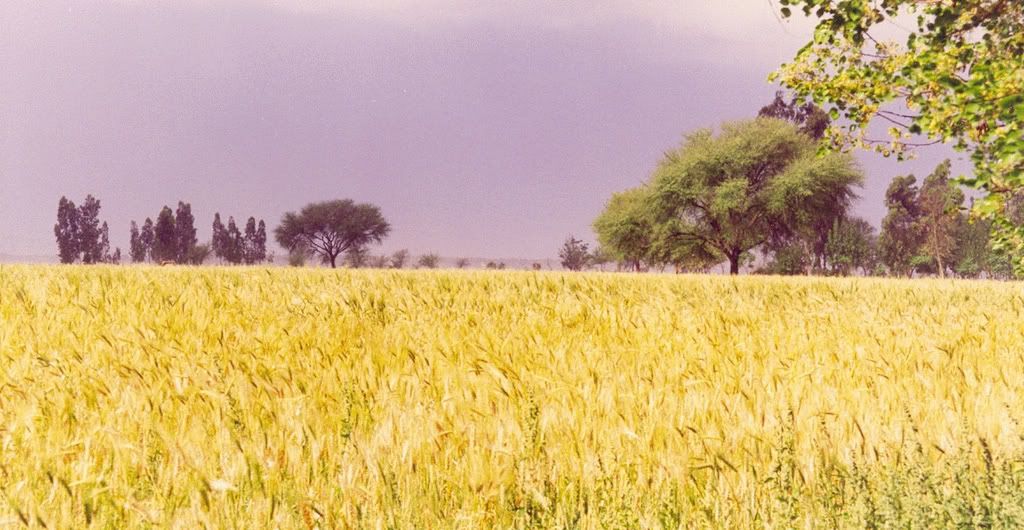
Mention Punjab and the first image that comes to mind is that of lush green fields. Mention Punjabi food and the first thing that comes to mind is makke ki roti and sarson ka saag. Punjabi cuisine is like the Punjabis themselves. It is simple, sizeable and hearty - with no unnecessary frills or exotic accompaniments .
ABOUT THE STATE :
The land of Punjab is a land of earthy culture, myriad images of swaying emerald green fields and warm people whose robust rustic ways of camaraderie and bonhomie are very much a part of their heritage. Beyond its joyous people and carpet spreads of fertile fields, this 'Land of Milk and Honey' has a host of culinary treasures that it readily offers to the others too.
INFLUENCES:
Punjab has imbibed some aspects of its cuisine from external influences. Connoisseurs of the cuisine say that the gravy component of Punjabi cuisine came from the Mughals. The most popular example is the murg makhani. It served the state well to combine this influence in its cooking since it had a lot of pure ghee and butter. Murg makhani also provided a balance to tandoori chicken, which was dry because it was charcoal cooked.
STAPLE FOOD:
Wheat and maize are the staple food grains that the hardworking, food-loving people of Punjab depend on for their nourishment. Typical Punjabi cuisine is as simple as it can get and there is nothing subtle about it. All lentils, especially black gram and yellow gram, are a part of Punjabi cuisine and so are rotis and curd. In fact, if you are anywhere in the north, chances are that you have some Punjabi dish every day without even knowing about it-if it is not dal and roti, then it can be rajma or chana. Milk is synonymous with this land of five rivers and plays an important role in the Punjabi diet. Various milk products add to the variety and a part of the daily diet are milk products like dahi, lassi, paneer, cream and not to miss ghee and butter. Butter is also an important cooking medium apart from being consumed raw along with the food. No Punjabi meal is complete without a blob of white butter (makhan). In Punjabi food, coriander, cumin, cloves, cinnamon, cardamom, black pepper, red chili powder, turmeric and mustard are regularly used. In fact, one of their main crops is mustard or sarson-its leaves used to make sarson-ka-saag while its seeds are used for tempering and also for making mustard oil, which is widely used in Punjabi cuisine.
Non-vegetarian food, especially chicken, is a favorite all over Punjab and the ever-popular tandoori chicken is almost an institution. Mutton and fish are also cooked in the traditional Punjabi kitchens with a lot of enthusiasm and form an integral part of any special menu.
METHODS:
Punjabi food is wholesome and full of rustic flavor. The custom of cooking in community ovens or tandoors prevails in rural areas even today. Tandoori dishes are popular all over the country today. Nans and parathas, rotis made of maize flour (makke di roti) are typical Punjabi breads. Of course, over the years the roti has been modified to add more variety, so there is the rumali roti, the naan and the laccha parathas, all cooked in the tandoor.
In Punjabi homes makke di roti and sarson ka saag is something of a delicacy simply because of the time it takes to prepare the dish. Besides the long preparation time, these vitamin rich dishes also require a lot of time to cook. Almost all the preparations are cooked on a slow fire to coax out that perfectly robust taste. Sarson ka saag is cooked on a slow fire for hours with a minimum of spices so that the fresh taste can be retained. In fact, the longer it takes to cook the saag, the better it tastes.
The dals are a specialty of Punjabi cuisine. Made of whole pulses like black gram, green gram and Bengal gram, they are cooked on a slow fire, often simmered for hours till they turn creamy and then are flavored with spices and rounded off with malai for that rich finish. The basic gravy used for vegetables and meat dishes is onion-tomato-garlic-ginger.
SPECIALITIES:
Most Punjabi menus are made according to the season. The universal favorite is chole-bathure which is a round-the-year item and is available at every wayside dhaba anywhere in Northern India. But, the pride of the Punjabi winter cuisine is sarson-ka-saag (mustard leaves) served with blobs of white butter accompanied by makke-di-roti and lassi (churned yogurt).
The other popular dishes, which belong exclusively to Punjab, are mah ki dal, rajma (kidney beans) and stuffed parathas. Punjabi cuisine is characterized by a profusion of dairy products in the form of malai (cream), paneer (cottage cheese) and curds.
Though chicken is a favorite with non-vegetarians, fish is also considered a delicacy, especially in the Amritsar region, which is also known for its kulcha, baked bread made of refined flour.
Tall glasses of lassi, made of yogurt, tempered with either salt or sugar, is a popular cooling drink of Punjabi origin but it is quite popular all over the country. Phirni, a sweet dish made of milk, rice flour and sugar and chilled in earthenware bowls is a typical Punjabi dessert. Punjabi sweet dishes like gulab jamuns and burfi have a strong percentage of khoya again made from milk.
Then there is also paneer-a must in the vegetarian Punjabi menu. Several delectable items are made out of this rather bland derivative of milk. Creations like the Kadai Paneer, and Makhani Paneer are basically Punjabi but are well loved all over the country.
One thing that makes Punjabi cuisine so special is the tandoor. Besides being a versatile kitchen equipment it is much more - a social institution. In rural Punjab, the community tandoor, dug in the ground, is a meeting place, just like the village well, for the women folk, who bring the kneaded atta (dough) and sometimes marinated meats to have them cooked while chit-chatting. Until a few years ago, this phenomenon existed in urban neighborhoods too. Even today, a few neighborhoods have a communal tandoor.
Punjab's other grand contribution is the dhaba - the roadside eatery that has become a prominent feature on the national and state highways. Earlier frequented only by truck drivers, today it is in vogue to eat at a dhaba-urban or roadside.
SPECIAL OCCASIONS:
A predominantly wheat eating people, the Punjabis cook rice only on special occasions. Rice is rarely cooked plain or steamed and is always made with a flavoring of cumin or fried onions, which is the served with rajma (kidney beans) or kadhi (curd curry). In winter, rice is cooked with jaggery - gurwala chawal or with green peas or as a delicacy called Rao ki kheer, which is rice cooked on a slow fire for hours together with sugar cane juice.
HOW TO EAT WHAT:
To go with their fine cuisine, the Punjabi's follow a very simple code of eating. A meal of vegetables and lentils is eaten with phulka or tandoor parathas (wheat bread) spread with desi-ghee or butter. On the other hand, a meat delicacy is usually eaten with a plain phulka or tandoor roti (without ghee or butter), accompanied by nothing more than a raita and muthi-piaz (onions split open by smashing them with a fist).
Punjabis believe in eating out of a big brass thali using their fingers and drinking out of a 12-inch-long brass glass.
EATING OUT:
In cities all over India, especially Delhi, Punjabi cuisine has got more complex with specialized restaurants surfacing all over. While some call themselves specialists in seek kebabs and rumali rotis others claim to serve only authentic butter chicken and chana masala. Even five star hotels have joined the bandwagon with their specialty restaurants recreating the ambience of a typical Punjabi Dhaba.

Twitter Delicious Facebook Digg Stumbleupon Favorites More